
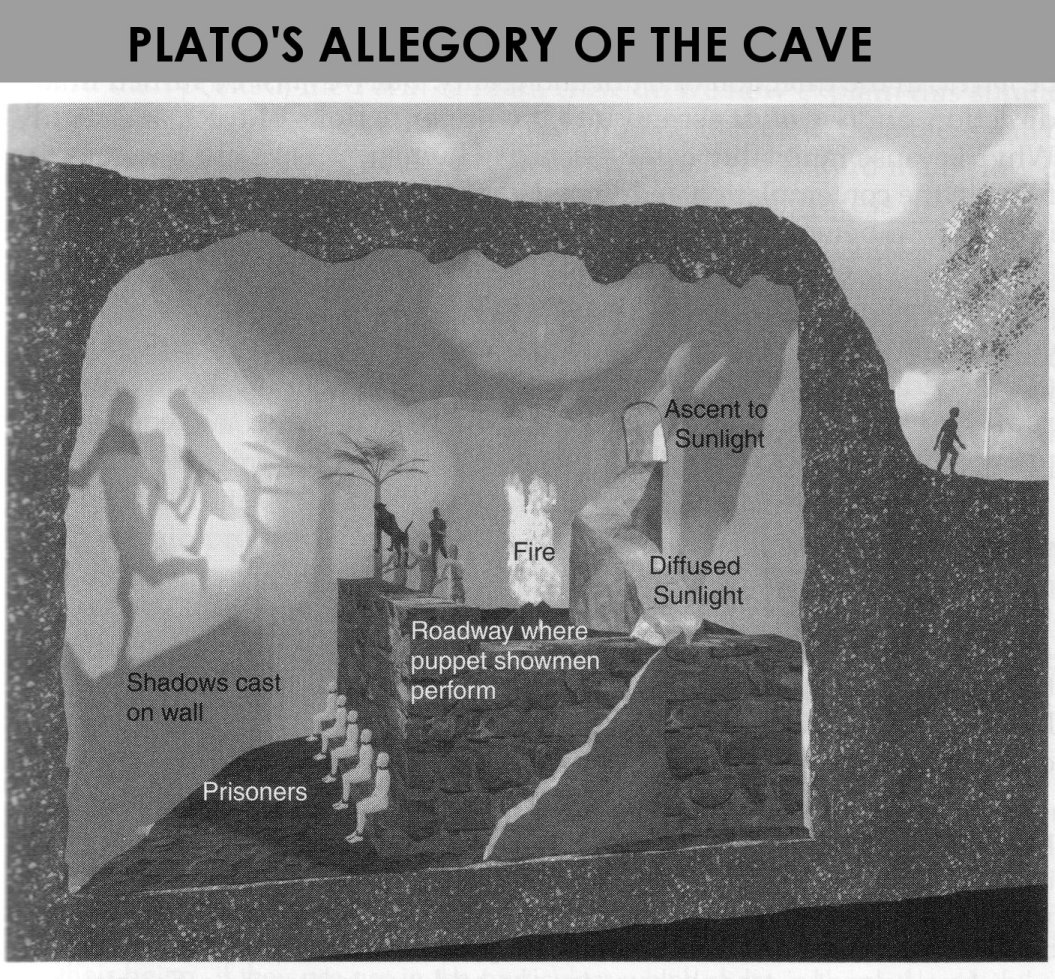
Plato's Cave is meant to describe the human journey. We start out as prisoners in our own life as we don't understand the point of our existence. Then people, like parents and teachers, try to show us the correct path to take in our lives. This is represented by the puppet showmen guiding our lives. However, the only way to overcome this endless cycle is to take a difficult path that might not end successfully. This is the only way to reach our true potential and live fulfilling lives. The sunlight in Plato's Cave represents this stage and is the point where people pity everyone else yet to discover themselves.
Monday, March 23, 2015

Sunday, March 22, 2015
Truman Show Blog
In the movie The Truman Show, Truman (played by Jim Carey) slowly realizes that his life isn't what it seems. Multiple instances reveal that he is being watched and that his life is practically fake. Everyone he knows is an actor and his playing a specific role in Truman's life. Truman doesn't realize this because it has been happening all his life. One woman in particular, keeps Truman from settling down, as she was a cast member that went against what the script had in store. This motivation fuels Truman to discover the creepy truth about his life.
As the viewers find out quickly, Truman's life is a television show that is streamed non-stop to the rest of the country. A huge dome is built somewhere and its the fake reality Truman lives in. We learn later on that Christof, the creator of the show, is in charge of everything that goes on in his life. In this case Christof is the deceiver because he is responsible for Truman's false identity. Like Descartes idea, the deceiver is in charge of installing fake things in a persons life. In this case, Truman's entire lifestyle is fake as everything was precisely designed to shape his life.
Throughout the movie Truman struggles to understand what is real and what isn't. He ends up realizing that everything is fake and that nobody can be trusted. However, similar to what Descartes stated, Truman can trust he is real because he knows he exists. Although it sounds strange, Truman has to trust himself and his instincts because he is the only that is genuine. To figure out the truth Truman must overcome everything he has ever known and do what feels right. This is a challenge because he doesn't know anything else, yet he must take a chance in order to have his questions answered. Truman does in fact do this and ends up saving himself from misery for the rest of his life.
As the viewers find out quickly, Truman's life is a television show that is streamed non-stop to the rest of the country. A huge dome is built somewhere and its the fake reality Truman lives in. We learn later on that Christof, the creator of the show, is in charge of everything that goes on in his life. In this case Christof is the deceiver because he is responsible for Truman's false identity. Like Descartes idea, the deceiver is in charge of installing fake things in a persons life. In this case, Truman's entire lifestyle is fake as everything was precisely designed to shape his life.
Throughout the movie Truman struggles to understand what is real and what isn't. He ends up realizing that everything is fake and that nobody can be trusted. However, similar to what Descartes stated, Truman can trust he is real because he knows he exists. Although it sounds strange, Truman has to trust himself and his instincts because he is the only that is genuine. To figure out the truth Truman must overcome everything he has ever known and do what feels right. This is a challenge because he doesn't know anything else, yet he must take a chance in order to have his questions answered. Truman does in fact do this and ends up saving himself from misery for the rest of his life.
Sunday, February 22, 2015
Buddhism
When Phil Connors sees he is stuck in time on Groundhog Day, he isn't too happy. He made it clear beforehand that he hated the small town and wanted to get in-and-out as soon as possible. When the day keeps happening and he can't find a way out, Phil becomes extremely depressed, even to the point he tries to kill himself. However, once he understands he can't leave Punxsutawney he decides to end his suffering and be nicer to people.One thing I noticed relates to the Second Noble Truth and Phil's suffering. He wanted desperately to leave just so he could go back to his hometown and be the hot-shot weatherman. His desire, and attachment to leave caused his suffering because he never gave the town a chance, he thought he was too good for those people. He became frustrated when he couldn't leave and couldn't find a way out. Although, this changes when he learns to give back to all the people he once loathed or didn't care about. For instance, Phil buys basically all the insurance there is off of Ned Ryerson, even though he was annoying him numerous times before. Also, Phil saves a man he never met before from choking. This shows that he forgot about his ego and learned to be a help to others in the town. Finally, when Phil learned to accept that he will never leave is the same time he started being nice to people. Like the Third Noble Truth states, "Suffering ceases when attachment to desire ceases." Phil realizes he'll never go back home so his suffering ceases, and then he turns out to be a great guy that helps many people out. Because of his kind actions, Phil becomes Enlightened and is content with his life.
Stages of Grief
Stage: Denial
Event: Hears same radio announcement, looks out his hotel room window and sees same car turning the corner, is in disbelief.
Explanation: At first Phil thinks the radio station is just playing the wrong audio, however that changes when he looks out his window and sees exactly what he saw yesterday. Doesn't believe it until the day turns out exactly the same as the day before.
Stage: Anger
Event: Punching Ned
Explanation: During his reliving of Groundhog Day Phil meets up with an "old friend" named Ned. Very quickly we learn Ned is energetic yet annoying and tries to talk to Phil about everything in his life. Phil escapes this encounter by scurrying off but not before stepping into a muck-filled pothole. As the day keeps happening over and over Phil tries different ways to avoid Ned. However, one day before they even get a chance to talk, Phil socks him in the face, not wanting to go through the process again, and clearly showing his anger about his current state.
Stage: Bargaining
Event: Phil stealing the money
Explanation: According to psychcentral.com bargaining is " the reaction to helplessness and vulnerability is a need to regain control." At this point, Phil understands the day is repeating itself and knows every little detail that happens in the town and uses this to his advantage. He sees a money delivery being interrupted by a waitress from the local diner. Phil times it just right where nobody is paying attention, and he avoids getting struck by a car to walk over and take the money. We later see he used this money to rent a limo, and buy a cowboy outfit to go see a movie. Phil wanted to take back some control in his life when he stole the money, so he could feel happy again and forget about the helpless state he's in.
Stage: Depression
Event: Attempting to commit suicide
Explanation: Sick of reliving the same day and finding no other way to escape this nightmare, Phil tries to kill himself. The only problem is he wakes up the next day just like every other day before that. He tries multiple different ways ranging from driving off a cliff to jumping off a building, but none of these work as he still wakes up exactly the same. Phil is so depressed because he sees no end to this cycle and wants to move on, but there just isn't a possible way.
Stage: Acceptance
Event: Being nice to Larry, and Rita
Explanation: After his failed attempts to end his life, Phil realizes that he might as well change his ways if he's going to be stuck here forever. Before this whole thing, Phil was a jerk to almost everybody and he only cared about himself. However, after an emotional talk with Rita he comes to the conclusion that he isn't a nice guy. As a result he starts treating others around town with more respect. For instance, he brings Larry and Rita coffee and donuts before the shoot, he builds an ice sculpture, changes an old lady's tire and even plays the piano at a community party. Phil realizes that even though he may never leave this day in time, he is making others feel appreciated and enjoying the effort he puts in. This causes Rita to change her feelings towards Phil and they end up spending the night together. Much to Phil's enjoyment, when the clock strikes 6:00 am, she is right there beside him.
Event: Hears same radio announcement, looks out his hotel room window and sees same car turning the corner, is in disbelief.
Explanation: At first Phil thinks the radio station is just playing the wrong audio, however that changes when he looks out his window and sees exactly what he saw yesterday. Doesn't believe it until the day turns out exactly the same as the day before.
Stage: Anger
Event: Punching Ned
 |
| Ned greeting Phil |
Stage: Bargaining
Event: Phil stealing the money
Explanation: According to psychcentral.com bargaining is " the reaction to helplessness and vulnerability is a need to regain control." At this point, Phil understands the day is repeating itself and knows every little detail that happens in the town and uses this to his advantage. He sees a money delivery being interrupted by a waitress from the local diner. Phil times it just right where nobody is paying attention, and he avoids getting struck by a car to walk over and take the money. We later see he used this money to rent a limo, and buy a cowboy outfit to go see a movie. Phil wanted to take back some control in his life when he stole the money, so he could feel happy again and forget about the helpless state he's in.
Stage: Depression
Event: Attempting to commit suicide
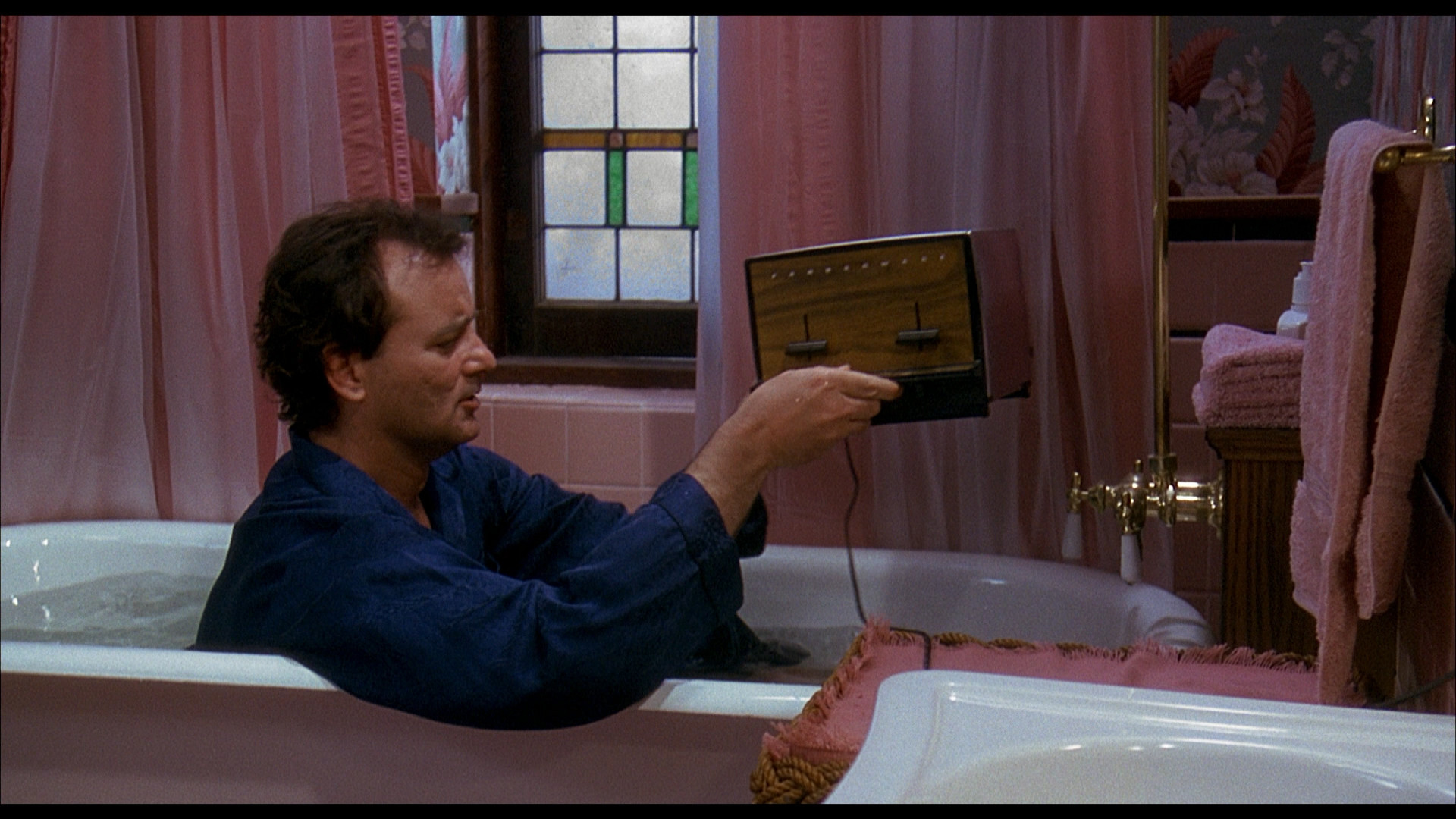 |
| One of the many ways Phil tries to kill himself. |
Stage: Acceptance
Event: Being nice to Larry, and Rita
Explanation: After his failed attempts to end his life, Phil realizes that he might as well change his ways if he's going to be stuck here forever. Before this whole thing, Phil was a jerk to almost everybody and he only cared about himself. However, after an emotional talk with Rita he comes to the conclusion that he isn't a nice guy. As a result he starts treating others around town with more respect. For instance, he brings Larry and Rita coffee and donuts before the shoot, he builds an ice sculpture, changes an old lady's tire and even plays the piano at a community party. Phil realizes that even though he may never leave this day in time, he is making others feel appreciated and enjoying the effort he puts in. This causes Rita to change her feelings towards Phil and they end up spending the night together. Much to Phil's enjoyment, when the clock strikes 6:00 am, she is right there beside him.
 |
| The curse is over |
Sunday, January 4, 2015
Hobbes and Hunger Games
 |
| Philosopher Hobbes |
 |
| Cornucopia Bloodbath |
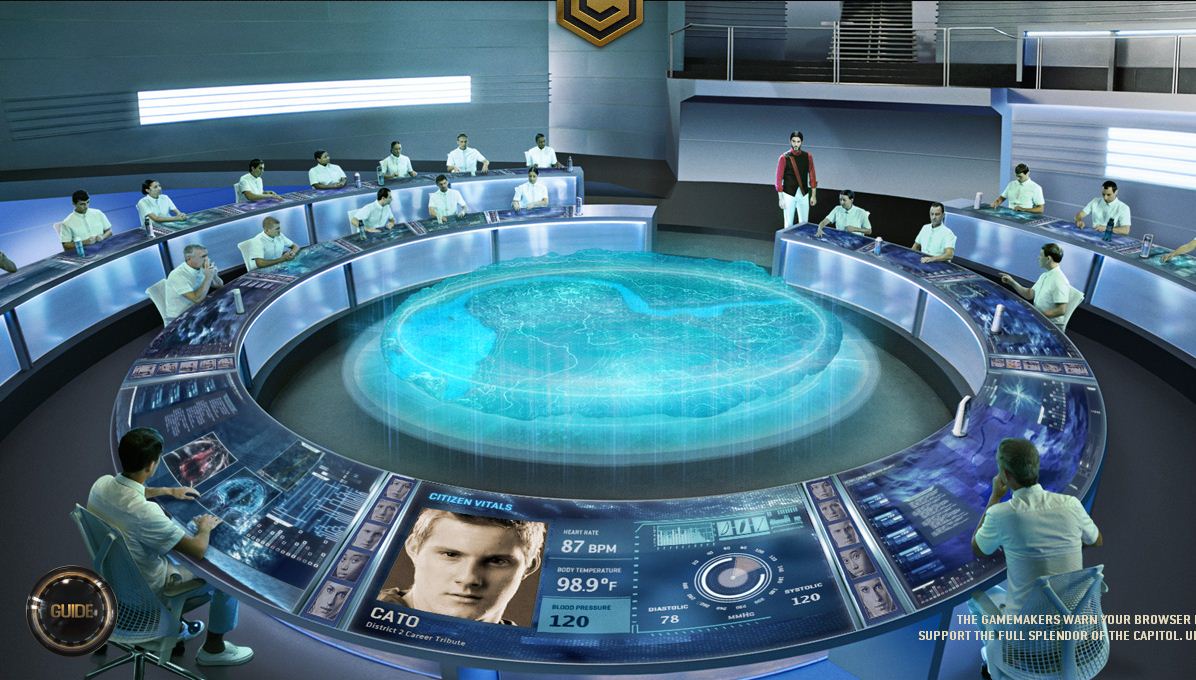 |
| Gamesmaker lounge |
Sunday, December 21, 2014
Machiavelli and President Snow
 |
| President Snow |
President Snow shows it's better to be feared by creating the Hunger Games. These games take a man and women (Tributes) from each of the twelve districts and have them fight it out to the death. These games are highly publicized as famous people serve as sponsors to help each of the tributes survive. They are also recorded for the public to see as the action is happening, like a T.V show! He explains at the Reaping video that there was a rebellion a long time ago and that was the reason for the creation of the Games. Now people are afraid of rebelling because they might get chosen for the Games.
 |
| "Too much hope is dangerous" |
Another aspect of The Hunger Games is the fact that the victors of each games get treated so well. According to The Hunger Games Wiki, victors get paid for life from the Capitol, receive special status in their own District, and living arraignments in the Victors Village. These prizes give each tribute a sense of hope, and President Snow says hope is very important in the purpose of the Games. "Why don't we just line up 24 people and execute them all at once, it'd be easier...hope is the only thing stronger than fear, but too much hope is dangerous". The conversation pictured is about how each tribute gives their District hope and that is another reason they don't rebel. In this case though, Katniss might be giving them too much hope.
Finally, Machiavelli stated hatred should be avoided because "he can endure very well being feared whilst not hated". In other words, people can still put up with you if you're feared. However, in this case being hated will only fuel a rebellion. An example is the riot in District 11 after Rue died. Those people hated the Capitol for forcing a little girl with practically no chance of winning to compete in the Games. So as a result, they started a riot that the Capitol ended shortly after.
Finally, Machiavelli stated hatred should be avoided because "he can endure very well being feared whilst not hated". In other words, people can still put up with you if you're feared. However, in this case being hated will only fuel a rebellion. An example is the riot in District 11 after Rue died. Those people hated the Capitol for forcing a little girl with practically no chance of winning to compete in the Games. So as a result, they started a riot that the Capitol ended shortly after.
 |
| District 11 riot |
Sunday, December 14, 2014
Bergson's Blog
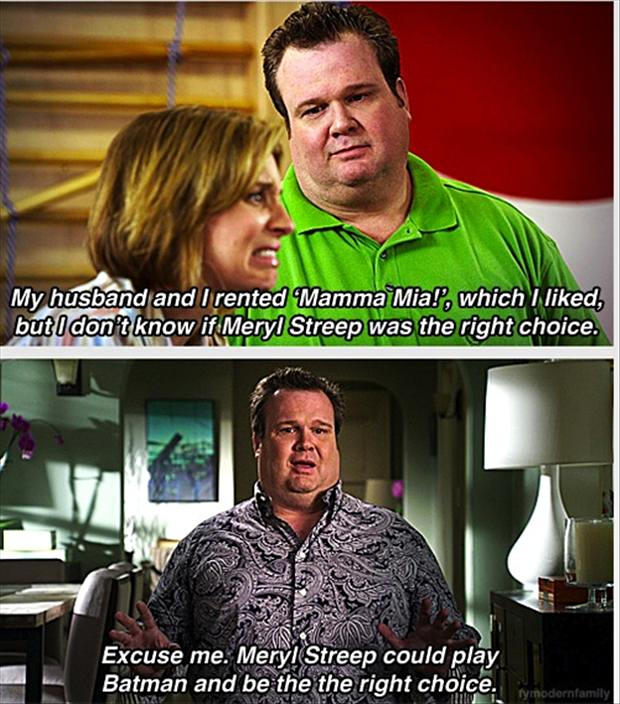 |
| Cameron defending Meryl Streep |
Subscribe to:
Posts (Atom)